This Lū‘au is All About Paniolo Pride
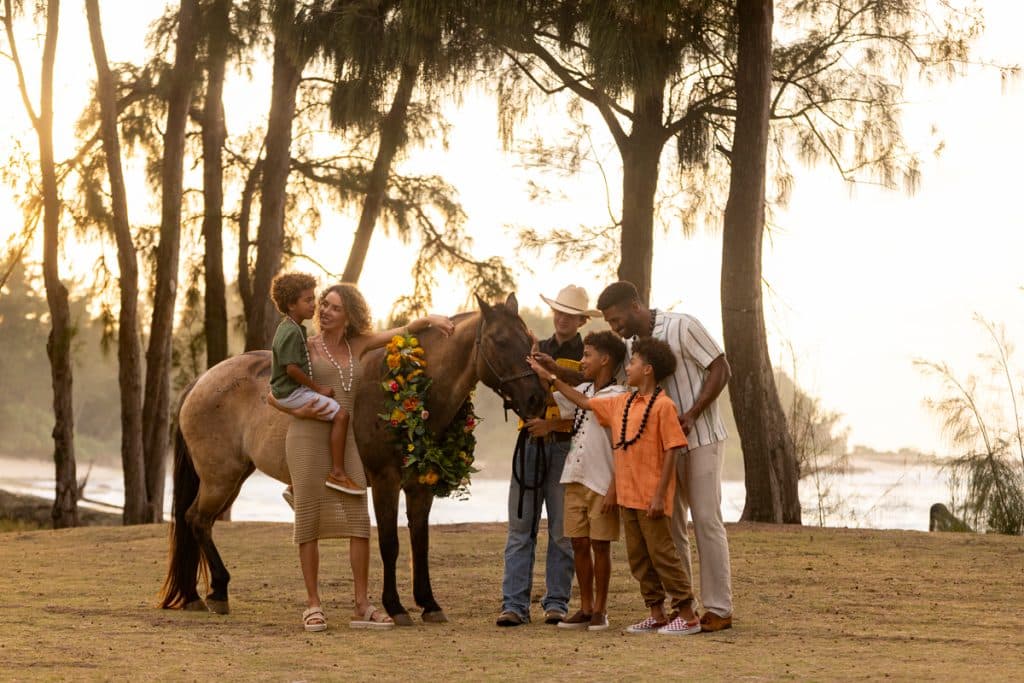
It may have seemed like your typical lū‘au—except, maybe, for the horses.
But if you know the history of O‘ahu’s North Shore, where the Ritz-Carlton O‘ahu, Turtle Bay is perched, it all makes sense.
The North Shore was once home to cattle ranches, where paniolo, or Hawaiian cowboys, worked the land on horseback. In fact, the hotel is located on the now-defunct Kahuku Ranch. There are still a handful of ranches here, from the historic, 2,740-acre oceanfront Dillingham Ranch in Mokulē‘ia to the 900-acre Gunstock Ranch nestled against the Ko‘olau Mountains in Lā‘ie. So, when the hotel reimagined its lū‘au a few years ago, it made sense to pay homage to the rich culture and history of the area.
“These Hawaiian cowboys became a vital part of Hawai‘i’s ranching history, and their legacy is still celebrated today through rodeos, music and a distinct cultural identity,” says hotel general manager Doug Chang, a graduate of Kamehameha Schools. “At The Ritz-Carlton O‘ahu, Turtle Bay, honoring Hawaiian history is not just a value—it’s a responsibility. When guests connect with the stories, traditions and spirit of this land, their experience becomes far more than a stay.”
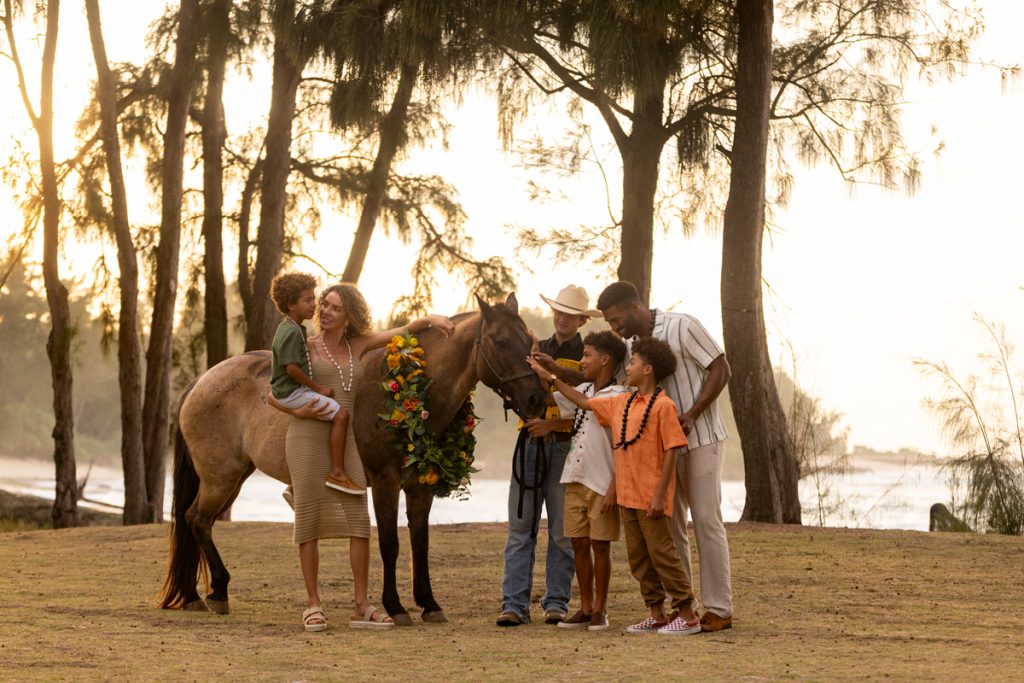
Photo: Courtesy of Ritz-Carlton O‘ahu, Turtle Bay
The feast—called Paniolo, A Hawaiian Cowboy Lū‘au—is set on a stunning beach just before sunset with the hotel’s stables as the backdrop. It’s the only paniolo-themed lū‘au in the Islands. And this Ritz-Carlton is likely the only one in the world with its own horses and unique experiences like trail riding, horse-drawn wagon rides and even an introductory horsemanship class where guests can learn about equine care.
READ MORE: Try These Equine Experiences Across Hawaiʻi
It’s my first time at the newly renovated hotel, which has been under the luxe Ritz-Carlton banner since July 2024. Formerly known as Turtle Bay Resort, the property underwent a major $250 million overhaul a year earlier to its 408 guest rooms and suites; a new club lounge was added as part of the project, and public areas were redesigned too, most notably the lobby. It’s the first thing I notice about the new version of the hotel many of us who grew up here remember. Gone is the dark, enclosed lobby; now the space is open and bright, with floor-to-ceiling windows that show off its prime 1,180-acre oceanfront location at Kuilima Point.
But much of what I’ve always loved about the resort remains—the friendly staff, the ocean views from every room, the gorgeous Kuilima Cove.
My family hitches a ride on a golf cart to the lū‘au location, which is roughly a 10-minute stroll from the hotel. We’re early, so we wander around the stables, stopping to visit a few of the hotel’s 35 horses and a couple of friendly goats.
The lū‘au takes place in a clear-roofed tent adorned with twinkle lights. It gives you the feeling of being outdoors—without having to deal with the outdoors. Each table is draped in red palaka print, a distinctive red-and-white-checked design that is often associated with paniolo culture. From the back of a vintage horse trailer, palaka-clad bartenders are serving mai tais with pineapple wedges. So far, so good.
Honestly, I’m surprised this paniolo theme isn’t more common at lū‘au in Hawai‘i. The Islands boast a long history of cattle ranching and wrangling, dating back to 1793 when British Capt. George Vancouver brought the first livestock to Hawai‘i and delivered them to King Kamehameha I as a gift. At first the king had placed a kapu (prohibition) on killing or hunting any cattle to allow the herd to grow, but soon the herd flourished to the point of becoming a problem. They rampaged through villages, destroying crops and even eating the thatch off the roofs of homes. In 1812 the kapu was lifted. Around this time mustangs were introduced to the Islands.
READ MORE: 5 Totally Unique Things That Make Hawaiʻi Special
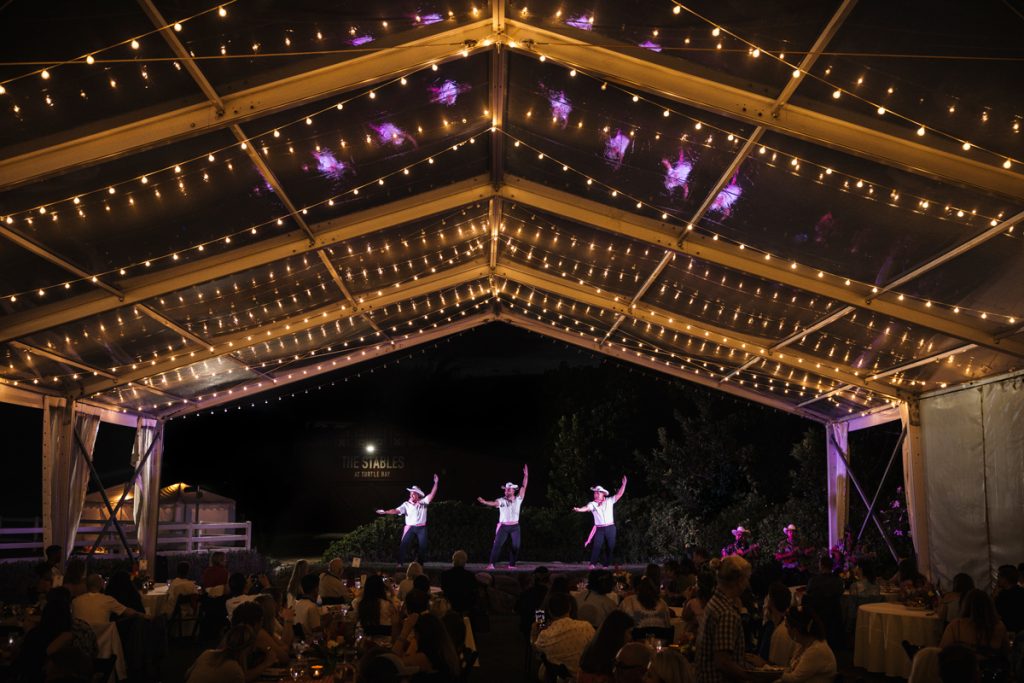
Photo: Courtesy of Ritz-Carlton O‘ahu, Turtle Bay
Later, King Kamehameha III invited Mexican vaqueros from California (when it was still part of Mexico) to teach the Hawaiians how to work the cattle. They learned to rope, slaughter and breed cattle, and how to cure hides, build fences and make saddles. The Hawaiians quickly took to riding and roping and, by 1908, three Hawai‘i Island paniolo had won top awards at the world-famous Cheyenne, Wyoming, rodeo.
A very distinct Hawaiian cowboy culture evolved, which even included its own style of music—ki hō‘alu, or slack-key guitar.
READ MORE: How the Slack-Key Guitar Became the Musical Heartbeat of Hawaiʻi
So imagine a lū‘au that incorporates these vibrant aspects of paniolo life: a dinner of smoked brisket and roast pork, games like cattle roping and horseshoe tossing, and lively cowboy-inspired Hawaiian music, all under a sunset-painted sky. It’s magical.
“The first time I went to the lū‘au … I really felt the connection to the place,” Chang says. “Sitting there, with the stables and the ocean, it just felt real to me. It didn’t feel like this was contrived. It felt special, like it was always here.”
Before dinner starts, we congregate outside the tent, where paniolo teach my 8-year-old son how to throw a lasso at a plastic sawhorse affixed with a bull’s head. Since I couldn’t master the overhead twirl of the lasso, I sat at a table to string a wrist lei out of orchids. Everyone here is from somewhere else. I’m sitting with a family from California, visiting this part of O‘ahu for the first time. My son, who clearly inherited his lasso skills from me, has moved on to the cornhole setup.
Everyone is milling around, drinks in hand. Some are weaving headbands out of lau hala; others are snapping selfies at the beach just steps away. So often at lū‘au, you’re killing time before the show starts. Here, the fun has already begun.
Part of the appeal of this lū‘au is how un-lū‘au it is. Nothing kitschy, no tiki torches or plastic lei. Even the food is a departure from the typical kālua pig and lau lau. The buffet table features smoked beef brisket and a whole pig, perfectly cooked on a 20-foot-long roaster and seasoned with Latin American spices. The platters of salad are bursting with color—watermelon radishes, deep purple lettuce, heirloom carrots, sweet corn, all grown at the hotel’s Kuilima Farm just down the highway.
But DIY s’mores are the real stars of the buffet, at least to my son and me. We build our s’mores with graham crackers, mini marshmallows and chocolate squares and heat them over a firepit. Like camping, but better.
And then the show starts.
Each hula and mele has some connection to Hawai‘i’s paniolo history, and the performances are riveting. They culminate with an exciting fire dancing show that my son still talks about, months later.
We skip on the shuttle to the hotel and decide to walk back along the shoreline. The skies are dotted with stars, our path lit by the waxing moon. It was a lū‘au unlike any I’ve been to—and one I will remember for a long time.
57-091 Kamehameha Highway Kahuku, (808) 293-6000, turtlebayresort.com.
This story was originally published in our FALL/WINTER 2025 issue, which you can buy here. Better yet, subscribe and get HAWAIʻI Magazine delivered to right to your mailbox.
Catherine Toth Fox is the former editor of HAWAIʻI Magazine and continues to contribute to the website and print publication.
Want to read more?
Check out the full article on the original site