China-Iran Carve New Trade Route As U.S Naval Blockade Of Tehran’s Ports Continues
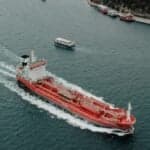


China-Iran’s overland rail project has become a lifeline for trade, due to the 2026 Strait of Hormuz Crisis and the imposition of a U.S. naval blockade of Iranian Ports.
As transporting oil and other products via waterways has become almost impossible, Tehran has resorted to the rail network, which has provided some relief.
According to experts, the China-Iran trade corridor spans more than 10,000 kilometres across Eurasia.
The railways connect Chinese manufacturing centres such as Xi’an and Yiwu to Tehran through Kazakhstan and Turkmenistan.
Trains loaded with electronics, machines and industrial goods are now completing a journey in only 12 to 15 days, much faster than water-borne trade, which can take almost a month.
However, while mega-max container ships can carry around 20,000 containers in a single trip, trains can accommodate around 50 or slightly more.
At present, there are two trains a week, with plans to increase that number as the project moves forward with further expansions planned in the near future.
The payment for the goods is done in Yuan, doing away with the need for the SWIFT system, from which Iran was barred in 2012 after the imposition of U.S sanctions.
Tehran has now started using the rail to transport even petrochemicals and bitumen directly to China.
This is a major development as Beijing and Tehran are deepening their economic relations and laying the foundation of a trade network which will reduce their dependence on maritime chokepoints controlled by Western countries.
The acceleration of the rail network occurred after the launch of Operation Project Freedom by President Trump in May 2026 to counter the Iranian blockade of the Hormuz Strait.
With insurance rates for Gulf shipping spiking over 600% and the Strait effectively closed to most commercial traffic, the rail link has become Iran’s primary economic artery.
Beyond the existing route, a more ambitious Five Nations Railway Corridor (FNRC) is being envisaged with China, Kyrgyzstan, Tajikistan, Afghanistan, and Iran.
The project aims to create a well-connected overland trade network which would bypass not only U.S naval warships but also reduce the dependence on Russian-controlled northern routes.
A feasibility study for the Afghan sections was fast-tracked for completion in March 2026 to address the urgent need for inland connectivity.
Want to read more?
Check out the full article on the original site