Massive 2,400-Year-Old Ship Graveyard Discovered In Bay Of Gibraltar
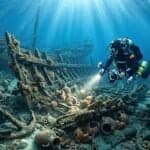


A team of Spanish archaeologists has uncovered a massive 2,400-year-old ship graveyard in the Bay of Gibraltar after identifying more than 150 underwater archaeological sites during a three-year research project called Project Herakles.
The discoveries were made by researchers from the University of Cádiz and the University of Granada.
Most of the sites found were shipwrecks lying on the seabed of the Bay of Gibraltar, also known as the Bay of Algeciras.
Some of the wrecks date back to the fifth century B.C., while others belong to later periods including the medieval era and World War II.
The bay lies at the northern end of the Strait of Gibraltar, one of the world’s most important maritime corridors linking the Atlantic Ocean and the Mediterranean Sea.
The area has long been known for rough waters that have caused many ships to sink over the centuries, including Roman vessels and British and Spanish warships.
Felipe Cerezo Andreo, an archaeology lecturer at the University of Cádiz, said the scale of the discoveries far exceeded what was previously known about the region.
Before Project Herakles began in 2019, only four underwater archaeological sites had been identified in the area. Researchers have now documented more than 150 sites within three years of work.
Andreo said the discoveries were made through extensive historical research, interviews with local fishermen and divers, and the use of advanced marine scanning technology to locate and map the wrecks.
The archaeologists found that many of the wrecks dated from the 18th to the 20th centuries. However, the team also identified Phoenician, Punic and Roman vessels buried beneath layers of sand on the seabed.
Researchers found that many of the wrecks were from the 18th to the 20th centuries. They also discovered Phoenician, Punic and Roman ships buried beneath the sand on the seabed.
One of the project’s most important discoveries was the wreck of the Puente Mayorga IV, a small gunboat from the late 18th century that was used to attack British ships.
Andreo said the Bay of Gibraltar had served as an important maritime zone since ancient times, with settlements such as Carteia and Iulia Traducta relying on the surrounding waters as major ports.
He added that the bay had acted as a “funnel of global history”, leaving behind a seabed filled with archaeological evidence from different eras.
To make the discoveries accessible to the public, researchers created virtual models and 360-degree videos of the underwater sites. These materials are available online and are also being displayed at local museums and town halls.
Andreo said the project aimed to encourage public interest in protecting underwater heritage sites, describing the wrecks as “museums beneath the sea”.
Strait of Gibraltar
The Strait of Gibraltar is one of the world’s busiest maritime chokepoints, connecting the Atlantic Ocean with the Mediterranean Sea.
The surrounding Bay of Gibraltar has historically been a major shipping and naval route, which explains the wide range of shipwrecks discovered in the area.
Project Herakles used marine scanning technology to identify and map underwater archaeological sites.
Researchers also combined historical records with information gathered from local fishermen and divers to locate wrecks buried beneath the seabed.
References: foxweather, wol
Want to read more?
Check out the full article on the original site