UK And France To Host 40-Nation Meeting On Reopening And Securing Strait Of Hormuz
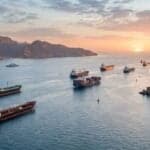


The UK and France are set to host the first Defence Ministers’ meeting for a planned multinational mission aimed at reopening and securing the Strait of Hormuz.
More than 40 nations are expected to join the virtual meeting, which will be co-chaired by UK Defence Secretary John Healey and French minister Catherine Vautrin.
The discussions are expected to focus on military contributions for a defensive multinational mission intended to restore commercial shipping through the Strait of Hormuz when conditions allow.
The UK government said HMS Dragon, one of the Royal Navy’s most capable warships, is being positioned in the region to ensure Britain can support a future multinational operation aimed at safeguarding freedom of navigation and protecting shipping traffic.
The meeting follows weeks of military planning involving 44 nations from different parts of the world.
British officials said the UK hosted military planners at the Permanent Joint Headquarters on 22 and 23 April, where countries worked on building a multinational plan for the operation.
According to the UK government, the proposed mission would remain strictly defensive and focus on restoring safe passage for commercial vessels through the strategic waterway once hostilities ease.
John Healey said the UK was moving from diplomatic discussions towards operational planning to stabilise shipping routes in the region.
He stated that trade, energy supplies and economic security depended on restoring confidence for vessels transiting the Strait of Hormuz.
Healey also confirmed he had directed HMS Dragon to the Middle East so Britain would be ready to support the mission if required.
He added that the government would not stand by while instability continued to affect costs for British households and businesses.
Tensions continue in the region despite a fragile ceasefire involving Iran, the United States and Israel.
Maritime traffic through the Strait of Hormuz remains heavily restricted after disruptions linked to the conflict that began in late February.
The Strait of Hormuz, which connects the Gulf to the Arabian Sea, normally carries around one-fifth of the world’s oil supplies.
Restrictions on vessel movements and the effective closure of the route have disrupted global shipping, affected energy supplies and increased oil prices higher in recent months.
France and the UK have both begun positioning military assets in the region as part of preparations for a possible future security mission.
France has deployed the nuclear-powered aircraft carrier Charles de Gaulle, while Britain announced over the weekend that HMS Dragon would head to the Middle East as part of what officials described as prudent operational planning.
Despite the military preparations, both governments have continued to stress that the proposed operation is intended to support regional stability rather than escalate tensions with Iran.
French President Emmanuel Macron said France had never planned to deploy naval forces directly into the Strait of Hormuz itself. He described the initiative as a wider security mission that would be coordinated with Iran.
Macron also opposed any blockade in the region and rejected proposals involving tolls on vessels transiting the waterway.
Iran, however, warned against the deployment of foreign warships into the strait. Iranian Deputy Foreign Minister Kazem Gharibabadi said any such deployment would receive what he described as a decisive and immediate response.
He stated that Iran believed security in the strait should be maintained solely by the Islamic Republic.
At the same time, Tehran continued to signal willingness for a negotiated settlement.
Iranian Foreign Ministry spokesman Esmaeil Baghaei described Iran’s latest proposal to Washington as legitimate and generous.
According to Baghaei, Iran was seeking an end to the conflict, the lifting of the US blockade and the release of frozen Iranian assets.
He added that safe passage through the Strait of Hormuz and regional security guarantees were also included in the proposal.
Diplomatic progress remains uncertain after US President Donald Trump rejected Iran’s latest response to Washington’s peace proposal and called Tehran’s terms unacceptable.
Israeli Prime Minister Benjamin Netanyahu also said major issues remained unresolved, adding that Iran’s nuclear infrastructure would still need to be dismantled before a lasting settlement could be reached.
Tensions in the region also continued over the weekend. Gulf states reported fresh drone incidents, including interceptions over the United Arab Emirates and Kuwait.
Qatar also said a freighter entering its waters had been hit by a drone.
HMS Dragon
HMS Dragon is a Royal Navy destroyer equipped with the Sea Viper air defence system, designed to detect, track and intercept aerial threats including missiles and aircraft.
British officials said the vessel could support a future multinational maritime security operation by helping protect commercial ships and supporting mine-clearance activities in the region.
Before deployment, HMS Dragon completed weapons and sensor trials at a NATO facility off Crete, including live-fire exercises conducted under simulated high-threat conditions to prepare for operations in the Middle East.
The Strait of Hormuz remains one of the world’s most important maritime chokepoints, handling roughly 20% of global oil shipments.
Any disruption to traffic through the route can rapidly affect tanker operations, energy markets, freight costs and global supply chains.
Reference: UK government
Want to read more?
Check out the full article on the original site