Iran War Sends Global Container Shipping Rates Soaring Over 100% As Fuel Costs Surge
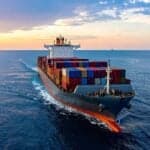


Global container shipping rates have risen sharply as the conflict between the United States and Iran continues to disrupt energy supplies, increase marine fuel costs and put pressure on global supply chains.
According to data from Xeneta and Drewry, freight rates on major routes from Asia to the United States and Europe have climbed significantly since the conflict began on February 28, with some routes recording increases of more than 100%.
The latest Drewry World Container Index showed that shipping a 40-foot container from Shanghai to Los Angeles cost $4,565 this week, while the rate from Shanghai to New York reached $5,505.
Xeneta data showed the spot rate from Asia to Northern Europe rose 27% over the past week to $3,649, while rates from Asia to the US West Coast increased 20% to $3,933.
The freight analytics firm said rates from Asia to the United States have surged 109% since the start of the conflict, while rates from Asia to Europe have increased by more than 50%.
Peter Sand, chief analyst at Xeneta, said freight markets are increasingly reflecting concerns over the impact of the conflict on energy supplies and global trade.
A major factor behind the rise in freight rates has been the increase in bunker fuel prices.
The conflict has disrupted oil flows through the Strait of Hormuz, which normally carries nearly 20% of the world’s oil supply. As a result, fuel costs for ships have risen sharply.
According to marine fuel pricing firm Ship & Bunker, prices for very-low-sulphur fuel oil (VLSFO), the fuel widely used by container vessels, have increased by 55% across 20 major bunkering hubs since the conflict began.
Prices stood at $1,211 per tonne in Fujairah, $770.50 in Singapore, $676 in Rotterdam and $918 in Los Angeles.
While analysts say there is no widespread shortage of bunker fuel, supplies have tightened and some volumes are being redirected to regions less affected by the conflict.
Fuel analysts and maritime experts have warned that bunker fuel markets could take around a year to return to normal even if a deal with Iran is reached quickly.
Because fuel can account for up to 60% of a container ship’s voyage costs, shipping companies have been forced to absorb significantly higher operating expenses.
Sea-Intelligence Maritime Analysis estimated that the conflict has added around $5.5 billion in bunker fuel costs to the container shipping sector since late February. German carrier Hapag-Lloyd alone is estimated to be spending up to $50 million more per week on fuel.
Major shipping lines including MSC, Maersk and CMA CGM have introduced fuel surcharges on spot cargoes, and many carriers are expected to incorporate those costs into annual customer contracts from July 1.
At the same time, shipping networks are facing congestion at major transshipment hubs in Southeast Asia.
According to Bloomberg, ports such as Singapore and Malaysia’s Port Klang have seen increasing backlogs as cargo flows shift across the region. Analysts say the congestion is reducing vessel availability and adding further pressure on freight rates.
Sand said disruption at major transshipment hubs can affect shipping networks well beyond the Middle East, including routes that do not pass through the Strait of Hormuz.
Importers are also contributing to stronger demand as some companies move shipments earlier than planned to avoid potential future rate increases.
Steve Hughes, chief executive of HCS International, said importers are once again trying to secure cargo space before costs rise further.
Analysts say this front-loading of cargo could push freight rates higher in the coming months, particularly as retailers and manufacturers enter the traditional inventory restocking period during July and August.
The impact is also being felt outside the shipping industry.
Zac Rogers, lead author of the Logistics Managers’ Index, said rising fuel costs could affect both vessel operations and manufacturing activity.
Higher energy prices may leave less fuel available for transportation and industrial production, potentially affecting the availability and cost of goods.
Some automotive suppliers have already begun bringing in additional raw materials as a precaution against further disruption, according to Collin Shaw, president of MEMA Original Equipment Suppliers.
Henning Gloystein, managing director for energy, climate and resources at Eurasia Group, said manufacturers in South and Southeast Asia are facing higher costs to replace crude oil and natural gas products imported from the Middle East.
He warned that some factories may have to choose between operating at a loss or temporarily shutting down if costs continue to rise.
Gloystein also said smaller feeder vessels that transport goods from factories to larger ports could face service reductions if operators prioritise fuel supplies for more profitable routes.
Industry experts believe freight rates could continue rising if the conflict persists and fuel prices remain high.
The increase in shipping costs is already being felt across global supply chains and transportation networks. Analysts say continued disruption in the Strait of Hormuz, higher fuel prices and stronger demand for vessel space will remain key factors influencing freight markets in the months ahead.
Want to read more?
Check out the full article on the original site