Criminal Charges Filed Against Chief Engineer Of Container Ship Dali That Hit Baltimore Bridge, Killing 6
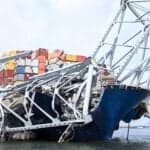


US federal prosecutors have charged the chief engineer of the container ship Dali for allegedly failing to report dangerous conditions aboard the vessel before it struck Baltimore’s Francis Scott Key Bridge in March 2024, causing the bridge to collapse and killing six road workers.
The charge against Karthikeyan Deenadayalan is the first criminal case filed against a crew member who was aboard the ship at the time of the disaster, which temporarily shut down the main shipping channel into the Port of Baltimore.
According to court filings, Deenadayalan has been charged with violating the Ports and Waterways Safety Act.
Prosecutors allege he “knowingly and willfully” failed to notify the US Coast Guard about hazardous conditions on the Dali before the vessel departed Baltimore.
Federal authorities and Deenadayalan have entered into a deferred prosecution agreement, meaning the criminal charge could eventually be dismissed if he complies with certain conditions. The terms of the agreement have not been publicly disclosed.
The US Department of Justice alleges the Dali was operating with equipment issues involving its generator fuel supply system.
Prosecutors claim redundant supply and booster pumps for generators 3 and 4 were not being used and that a non-redundant flushing pump had been used instead.
According to investigators, the Dali suffered at least four power outages before striking the bridge.
Court documents state the first blackout was likely caused by a loose wire, while the second and critical blackout occurred because the vessel relied on the non-redundant flushing pump to supply fuel to two of its four generators.
The charges against the chief engineer come weeks after federal prosecutors unsealed criminal charges against the vessel’s operator, Synergy Marine, and one of its technical superintendents.
Prosecutors allege the company concealed dangerous conditions aboard the ship by falsifying inspection reports and bypassing maritime safety requirements. They also claim the vessel was fitted with the wrong fuel pump, preventing it from regaining power before the collision.
Synergy Marine has denied the allegations, describing them in court filings as “unfounded and strenuously denied.”
The collapse of the Francis Scott Key Bridge on March 26, 2024, killed six construction workers who were repairing potholes on the structure.
The incident also blocked the main navigation channel serving the Port of Baltimore for weeks, disrupting shipping and business activity in the region.
The ship’s owner and operator have already reached settlements with the families of the six workers who died, surviving road crew members, the State of Maryland and the US government over bridge losses, salvage operations and recovery costs.
However, several civil claims remain active, including cases brought by the City of Baltimore, Baltimore County, longshore workers and local businesses seeking compensation for economic losses linked to the bridge collapse and port disruption.
Separately, Grace Ocean, the owner of the Dali, has filed a lawsuit against shipbuilder HD Hyundai in Pennsylvania, alleging manufacturing defects.
The shipyard has rejected the claims, noting the vessel had been operating for more than a decade and that it was not responsible for maintenance during that period.
Meanwhile, reconstruction of the Francis Scott Key Bridge is moving forward. Maryland authorities expect the replacement bridge to be completed by the end of 2030.
The new bridge will be more than two miles long, feature two 12-foot lanes in each direction and provide 230 feet of clearance above the federal shipping channel.
Project costs have been estimated at about $9 billion, with construction work divided into multiple contracts covering over-water sections, land approaches and demolition of the remaining bridge structure.
References: cbsnews, weaa
Want to read more?
Check out the full article on the original site