Qatar Brings Back First Empty LNG Tanker Through Strait Of Hormuz Since US-Iran Conflict Began
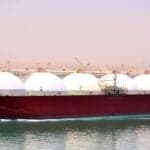


Qatar has brought an empty LNG tanker back into the Persian Gulf through the Strait of Hormuz for the first time since the conflict involving Iran began in February, according to ship-tracking data cited by Bloomberg.
The vessel, Al Hamla (IMO: 9337743), owned by Qatar’s state shipping company, arrived at the Ras Laffan LNG export terminal on June 18 after passing through the Strait of Hormuz.
The tanker had stopped sending its AIS tracking signal near western India about a week earlier, according to ShipAtlas data.
The movement comes after an interim peace deal between the United States and Iran that calls for the reopening of the Strait of Hormuz, a key route for global energy shipments.
During the conflict, the closure of the strait restricted access to around one-fifth of global LNG supply.
Only limited cargoes were able to pass through, either on vessels that turned off their tracking systems or with approval from Iranian authorities, the report said.
Until now, no empty Qatari LNG tanker had entered the Persian Gulf since the conflict began in February.
Ship-tracking data also shows that at least four empty LNG vessels linked to Qatar have recently started heading back toward the Middle East after being idle or sailing in other directions.
Another Qatar-chartered ship is also moving toward the region, with all vessels signalling Ras Laffan as their next destination.
Four additional Qatar-linked LNG carriers are currently waiting in the Gulf of Oman and could attempt to pass through the Strait of Hormuz into the Persian Gulf.
Qatar is aiming to restore most of its LNG export capacity within two months of the reopening of the Strait of Hormuz, according to Bloomberg. However, securing enough vessels to transport cargoes will be key to restarting full operations.
The Strait of Hormuz remains one of the world’s most important energy shipping routes, and any disruption continues to affect global LNG supply and trade flows.
References: MoneyControl, The Week
Want to read more?
Check out the full article on the original site