WWII “Hell Ship” Sunk By US Torpedoes After Misidentification, Found Off Philippines After 80-Year Search
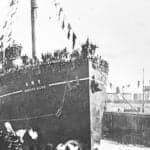


The wreck of the Japanese transport ship Hōfuku Maru, which sank during World War II with more than 1,000 Allied prisoners of war on board, has been located off the western coast of the Philippines more than 80 years after it disappeared beneath the South China Sea.
Researchers say the vessel was found near Zambales province on the island of Luzon after an investigation that combined wartime military records, sonar surveys and deep-water dives.
The discovery helps identify the final resting place of hundreds of British and Dutch servicemen who died when the ship was sunk in September 1944.
Hōfuku Maru was one of the Japanese vessels known as “hell ships”, merchant ships used to transport Allied prisoners of war under extremely harsh conditions. Because the ships were not marked as POW transports, Allied forces often had no way of knowing prisoners were on board.
On September 21, 1944, Hōfuku Maru was sailing in a Japanese convoy from Southeast Asia toward Japan carrying around 1,200 British and Dutch prisoners.
US aircraft attacked the convoy, believing the ship to be a military cargo vessel. One of four torpedoes launched during the attack struck the ship, causing it to split apart and sink within minutes.
Most of the prisoners trapped below deck were unable to escape. Historical records indicate only about 200 survived.
For decades, the exact location of the wreck remained unknown due to incomplete and often conflicting wartime records.
In June 2025 researchers from the Hellships Memorial Foundation found a digitised Japanese document written by officers aboard the convoy’s lead ship.
The document included a timeline and map showing where the convoy was attacked and identified Hōfuku Maru as the second vessel in line when it was hit.
Researchers then compared the information with an aircraft action report from the USS Bunker Hill, which described the sinking of an auxiliary cargo vessel during the same attack.
The combined evidence pointed investigators to an area more than 30 miles (48 kilometres) from where the ship was previously believed to have sunk.
Local fishermen also told researchers that a large wreck had long been known in the area.
The Hellships Memorial Foundation, supported by the Cultural Heritage Agency of the Netherlands and Discovery Channel, carried out sonar surveys and dive operations at the site.
Divers located a large wreck at a depth of about 164 feet (50 metres). The site, however, was difficult to examine because volcanic ash from the 1991 eruption of Mount Pinatubo has gradually covered parts of the wreck and reduced visibility underwater.
Maritime archaeologist Calvin Mires and underwater imaging specialist Evan Kovacs captured hundreds of images and created a detailed 3D model using photogrammetry technology to help identify the vessel.
Researchers compared the model with original blueprints of Hōfuku Maru, which was built in 1919. The vessel’s dimensions, cargo hold arrangement and mast positions matched the historical plans.
The wreck is also broken into two sections, consistent with both Japanese and US accounts of the sinking.
After reviewing the findings, the Cultural Heritage Agency of the Netherlands said the wreck is “almost certainly” Hōfuku Maru.
History of Japanese “hell ships”
According to historical records, Japan used 56 such vessels to transport more than 62,000 prisoners of war during World War II. Allied attacks sank 19 of them, while the locations of five remain unknown.
Conditions aboard Hōfuku Maru were severe. Around 1,000 British and 250 Dutch prisoners were crowded into two cargo holds so tightly that many had to take turns lying down.
Survivor testimony presented during post-war trials described extreme heat, poor sanitation, inadequate food and very limited water supplies. Prisoners received only three-quarters of a pint of water per day.
The ship also spent more than a month docked in Manila after suffering engine problems. During that period, nearly 100 British prisoners died as conditions deteriorated further.
Following the war, Sgt. Maj. Jotani Kitaichi of the Imperial Japanese Army was convicted during British war crimes trials in Singapore and sentenced to death by hanging.
Divers involved in the recent expedition said they encountered human remains on parts of the wreck but did not enter the cargo holds.
Authorities have classified the site as a war grave, and no excavation is planned.
The Cultural Heritage Agency of the Netherlands said the wreck will remain undisturbed out of respect for those who died and their families. The exact location has not been made public to help protect the site.
Governments including the United Kingdom, the Netherlands and the United States have been informed of the discovery and are expected to discuss how the victims should be commemorated.
References: CNN, popsci
Want to read more?
Check out the full article on the original site