Titan Submersible That Killed 5 Operated Without Effective Regulatory Oversight, Probe Finds
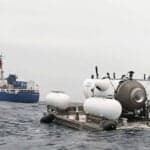


The OceanGate Titan submersible operated without effective regulatory oversight in Canada despite repeated interactions with multiple federal agencies, a final investigation by the Transportation Safety Board of Canada has found, exposing systemic gaps in oversight, safety coordination and submersible certification frameworks.
The 2023 implosion of the Titan, which killed all five people on board during a descent to the wreck of the Titanic in the North Atlantic, was caused by failure of a carbon fibre pressure hull combined with structural and design shortcomings and a lack of validated engineering testing, the 136-page report said.
The vessel was owned by OceanGate and co-founded by CEO Stockton Rush, who was among those killed.
The Safety Board said critical operational and risk-related information was dispersed across at least nine Canadian federal departments, but no single authority was responsible for consolidating it, leaving regulators without a complete understanding of the operation.
“When it came to the Titan, critical information existed across multiple federal government organizations, but no one was responsible for connecting the dots,” said Yoan Marier, Chair of the Transportation Safety Board. “Without a complete picture of the operation, the Titan continued to operate in Canada without regulatory oversight.”
The submersible’s fatal dive on June 18, 2023, occurred while it was being towed and supported from the Canadian-flagged support vessel Polar Prince, operated by Horizon Maritime Services Ltd..
The mission departed from St. John’s, Newfoundland and Labrador, and descended approximately 685 kilometres offshore toward the Titanic wreck site.
The investigation found OceanGate had engaged with Transport Canada, Fisheries and Oceans Canada, Global Affairs Canada, Parks Canada, and the Canada Border Services Agency during planning and operational discussions between 2019 and 2022.
However, key safety concerns identified within some departments were not passed to Transport Canada, limiting its ability to evaluate operational risk.
In 2021, a Fisheries and Oceans Canada staff member who participated in an OceanGate mission raised concerns that the Titan had not been certified by any regulatory authority, was constructed using non-standard materials for passenger submersibles, and lacked insurance coverage. Those concerns were escalated internally but were not shared with Transport Canada, the report found.
By 2022, when OceanGate applied for further permissions through Global Affairs Canada, Fisheries and Oceans Canada did not raise objections during consultations.
The report concluded that limited inter-agency communication prevented Transport Canada from identifying significant safety risks and determining appropriate oversight measures.
The investigation found that the Titan’s carbon fibre cylindrical hull was never properly tested to confirm it could safely handle repeated deep dives. Each dive, including trips to the Titanic wreck, likely added damage to the structure over time.
The report says the design did not follow standard engineering practices for deep-sea pressure vessels. Unlike most submersibles, which use titanium and spherical shapes, the Titan used a carbon fibre cylinder, which was not fully validated for this kind of pressure.
The submersible was equipped with two systems designed to detect hull integrity issues, but neither prevented the catastrophic implosion during its 88th dive.
The report also describes safety issues inside OceanGate. It says the company was strongly driven by its CEO and focused heavily on innovation, sometimes at the expense of safety.
Several employees raised concerns about the design and risks. Some left the company or were dismissed after doing so. One former operations director, David Lochridge, was fired in 2018 after warning about safety problems.
Earlier incidents included electrical failures and a loud bang heard during a dive to the Titanic, but these did not stop operations.
The Titan operations were supported by Canadian marine infrastructure, including logistics and towing arrangements out of Newfoundland and Labrador.
The Polar Prince, operated by Horizon Maritime Services Ltd., provided at-sea support for OceanGate expeditions in 2021, 2022 and 2023, including towing the submersible to dive locations and acting as a surface base.
Transport Canada was aware of the operation from St. John’s but did not exercise oversight over the submersible itself, a situation the report said is not uncommon in certain vessel categories but highlights regulatory limitations.
Six Recommendations Issued
The Transportation Safety Board of Canada issued six recommendations to address:
- Regulatory oversight gaps in submersible operations
- Technical certification and validation standards for pressure vessels
- Safety management systems and operational risk controls
- Inter-agency communication and information-sharing within government
The board said these measures are necessary to prevent similar incidents in emerging deep-sea exploration and tourism sectors.
Reference: TSB
Want to read more?
Check out the full article on the original site