Ukraine Reveals US Harpoon Missile Launcher Used Against Russian Naval Targets In Black Sea For First Time
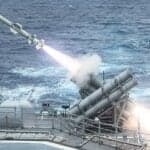


Ukraine has publicly displayed its US-supplied Harpoon coastal defence missile launcher for the first time since receiving the system in 2022, giving the first official look at one of its key anti-ship weapons used to protect the Black Sea coast.
The launcher was presented during President Volodymyr Zelenskyy’s visit to Ukraine’s southern Odesa region, where he met commanders of the Ukrainian Navy to review the security situation and the country’s coastal defence capabilities.
During the visit, the Navy displayed several weapons in service, including the Harpoon and Ukraine’s domestically developed Neptune coastal missile systems, unmanned aerial vehicles and torpedo weapons.
According to materials released by Ukraine’s presidential office on July 4, the meeting focused on security in southern Ukraine and an assessment of the operational capabilities of the Naval Forces.
Although Ukraine has been using Harpoon missiles since 2022, this is the first time the launcher has been officially shown.
Images released during the visit show a truck-mounted launcher carrying four Harpoon missile canisters. Per Defence Blog, the launcher has been adapted for coastal defence from the missile’s original naval launch configuration.
Ukraine received the Harpoon coastal defence systems from the United States and Denmark in 2022. At the time, reports said the United States would provide newly developed coastal launchers mounted on wheeled chassis that were not used by the US military.
The Harpoon system entered service soon after its delivery and has been used against Russian naval targets in the Black Sea. In June 2022, Ukrainian forces used Harpoon missiles to sink the Russian rescue tug Vasily Bekh.
The missiles were also used to strike offshore drilling platforms near Crimea later that year.
The footage released during Zelenskyy’s visit also appeared to show a Naval Strike Missile (NSM) launcher made by Norway’s Kongsberg.
Unlike the Harpoon system, Ukraine has never officially announced receiving the NSM. Reports in 2023 suggested the country could receive a Polish NSM Coastal Defence System battery or a battalion-sized unit.
I began my working trip to the Odesa region by holding a coordination meeting with the Command of the Naval Forces of the Armed Forces of Ukraine, focused on security issues in the southern region.
Primary attention was given to countering constant Russian air attacks with… pic.twitter.com/9fo5wvf6Xt
— Volodymyr Zelenskyy / Володимир Зеленський (@ZelenskyyUa) July 4, 2026
However, the launcher seen in the latest images has a different camouflage pattern from Poland’s NSM systems, so its origin remains unclear.
The footage provides the first official visual confirmation that Ukraine currently operates at least two Western coastal anti-ship missile systems alongside its domestically developed Neptune missile system.
Harpoon anti-ship missile
The Harpoon anti-ship missile was developed in the United States in the late 1960s after studies of Soviet P-15 missiles used in regional conflicts.
McDonnell Douglas won the contract to develop the missile in 1971. It became the first US anti-ship missile that could be launched from aircraft, surface ships and submarines, and entered service with the US Navy in 1977.
Boeing later took over the programme after acquiring McDonnell Douglas and has continued to upgrade the missile through several versions.
Depending on the variant, Harpoon missiles can hit targets at sea from about 70 to 130 nautical miles (130 to 240 km).
The missile flies close to the sea surface and uses active radar guidance in the final stage of its flight. Later Block II versions also added GPS guidance, allowing the missile to strike coastal and port targets.
The missile was first used in combat in March 1986 during US Navy operations in the Gulf of Sidra off Libya. During the operation, US Navy aircraft and the cruiser Yorktown fired Harpoon missiles at several Libyan warships, including a French-built Combattante II-class missile boat.
Over the years, the Harpoon has received several upgrades. The Block 1B and Block 1C versions improved its sea-skimming flight profile and range.
The Block 1G version added a target re-attack capability, while the later Block II version introduced GPS guidance for engaging coastal targets.
Earlier, the United States also supplied Ukraine with low-cost ERAM cruise missiles developed under a rapid production programme.
The experience from the programme later helped the US Air Force develop its Counter-Air Missile Program (CAMP), which aims to build a lower-cost interceptor for air defence and fighter aircraft.
References: united24media, militarnyi
Want to read more?
Check out the full article on the original site