UW kicks off one-year study to explore expansion and address needs for health care, impactful research
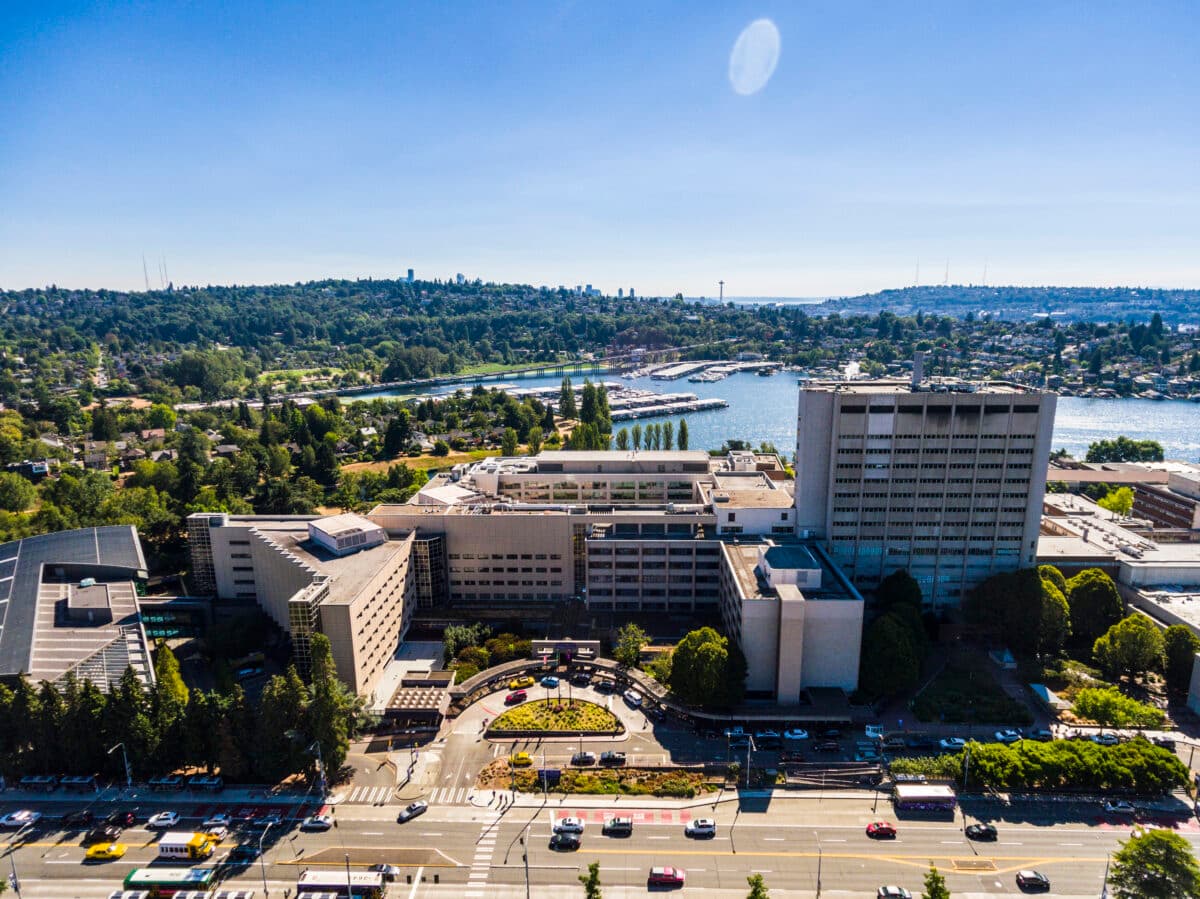

The University of Washington is exploring a significant redevelopment and expansion of UW Medical Center–Montlake, the Magnuson Health Sciences Center and west campus.
To kick off this potential 10-year effort, the UW Real Estate office is issuing a Phase-1 request for proposals for a one-year exercise to find a development advisor that will, in collaboration with the UW, deliver an executable strategy for the project. This Phase-1 work would include a year-long process to identify potential capital funding sources, assess the existing south campus buildings and infrastructure, and determine a realistic program and plan for expansion and redevelopment.
The UW’s current facilities cannot meet the demand for health care as more patients turn to UW Medicine for cancer, heart and transplant treatments, among other care needs. UWMC–Montlake currently operates with a shortage of beds, and that shortage is expected to grow to nearly 300 by 2040.
Additionally, modern biomedical research and health research, such as the Institute for Protein Design led by Nobel Prize winner David Baker and the Brotman Baty Institute for Precision Medicine require expanded facilities to continue delivering new treatments and cures.
Teaching, research and clinical facilities in the Magnuson Health Sciences Center are split across many floors and wings, and many of those spaces need replacement or will soon. The review will also include close consultation with the schools of Dentistry, Nursing and Pharmacy to determine the need for improved teaching, clinical training, research and dental care facilities.
A four-month initial feasibility study conducted by Seattle architectural and design firm NBBJ, along with the UW Medicine Strategy Team, determined the clear need for a new hospital tower at UWMC–Montlake with capacity for up to 400 additional beds. In a separate assessment, it was determined a new electrical substation is needed, as the existing substation is at capacity.
The RFP states a clear preference for limiting situations where a unit has to move more than once and for minimizing disruptions to teaching, research and patient care. If the project proceeds, the preferred project timeline includes the construction of new, permanent space for any units that may need to move, to be completed in approximately five years, at which point the existing hospital tower and portions of the Magnuson Health Sciences Center would be demolished and replaced. If the project proceeds, any units that are impacted will be supported through the project, including if there is a need to move to temporary space during construction.
An important component of the RFP is the development of a structured, multi-source funding plan for the entirety of the project. Potential funding sources include, but are not limited to, philanthropy, government funding, public-private partnerships and ground leases. If the year-long review determines that some aspects of the program are not feasible, the team will provide an alternative plan.
For more information, contact Victor Balta at balta@uw.edu.
Want to read more?
Check out the full article on the original site