Supertanker Abruptly Reverses Course Near Bab el-Mandeb Over Houthi Threat
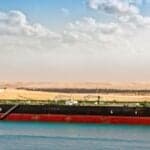


A supertanker on its way to the Red Sea Port of Yanbu in Saudi Arabia made a U-turn before reaching the Bab el-Mandeb Strait.
The large crude carrier, named New Champion, turned in the Gulf of Aden during its journey towards the Red Sea. It was chartered by a Chinese buyer to collect crude oil from Yanbu and is now moving east at a top speed of 16 knots.
The tanker, registered in Hong Kong, likely decided to turn back to avoid being attacked after recent strikes on ships associated with Saudi Arabia by the Iran-backed Houthi Group.
Additionally, some insurance providers hesitated to offer coverage for ships going to Saudi Arabia due to the risk of attacks, as reported by shipping and insurance brokers.
This incident shows the impact of the Houthi naval blockade on Saudi Arabia, which will create more challenges for Chinese buyers to access Saudi oil.
Though Western ships have remained careful about sailing through the Red Sea, China-bound tankers have continued to receive around 520,000 barrels per day from Yanbu in 2026, and this figure has risen despite the U.S-Iran war.
This is because Saudi Arabia redirected its crude exports to Yanbu to avoid Iranian blockades in the Strait of Hormuz.
New Champion seems to be the first Chinese vessel to change course, due to increasing risks in the region.
A few days back, two Chinese-owned supertankers also passed through the Bab-el-Mandeb Strait while carrying Saudi cargoes and had their transponders activated, making them the first tankers to exit the Red Sea with Saudi Crude after the Houthi blockade came into effect.
On the other hand, some ships with links to Europe and the West in general are avoiding the southern exit of the Strait.
They are taking the longer and more expensive route through the Suez Canal and around Africa to reach Asian markets.
A supertanker named Gas King, loaded with cooking gas for Japan, left the Red Sea through the Canal, becoming one of the first vessels to leave the region with a cargo from Saudi Arabia after the Houthi blockade was announced.
Want to read more?
Check out the full article on the original site