Port Of Long Beach Becomes First U.S. Port To Partner With MARAD On Nuclear Power
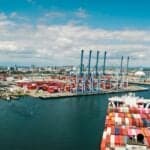


The Port of Long Beach has become the first U.S. seaport to sign a Memorandum of Cooperation with the U.S. Department of Transportation’s Maritime Administration (MARAD) to support the development of Small Modular Reactor (SMR) nuclear technology for commercial maritime use.
The agreement establishes a framework to test and deploy SMR technology to power commercial cargo vessels, port infrastructure, and other maritime equipment.
Under the partnership, the Port and MARAD will collaborate with the U.S. Coast Guard, the Department of Energy, and the Nuclear Regulatory Commission to draft safety standards, operational guidelines, and inspection protocols for nuclear-powered commercial ships.
The nonbinding agreement does not commit either party to funding, direct procurement, or specific technological choices, but positions Long Beach as a central testing site for next-generation marine energy.
Port officials framed the initiative as a natural step for the country’s main trans-Pacific trade gateway.
Port of Long Beach CEO Dr Noel Hacegaba noted that combining federal leadership with private-sector innovation will help advance nuclear energy in shipping.
He emphasised that the port currently moves $300 billion in cargo annually and supports 2.7 million American jobs.
Long Beach Board of Harbour Commissioners President Frank Colonna added that developing alternative energy sources aligns with the port’s history of demonstrating innovative technology while supporting the goods movement industry.
Maritime Administrator Stephen M. Carmel highlighted that the effort aligns with broader national goals under President Trump and Transportation Secretary Duffy to rebuild U.S. shipbuilding and secure energy independence.
Carmel noted that active testing of SMR technology will strengthen supply chain resilience during national emergencies and help train highly skilled American mariners.
The partnership builds on a May 7, 2026 Request for Information issued by MARAD to gather industry feedback on building scalable, U.S.-manufactured SMRs for marine transportation.
It also complements a separate lease agreement between the Port and American technology firm BlueCore Energy Inc., which will use port facilities to assemble, test, and store maritime power modules.
The search for clean energy comes as the Port of Long Beach expects its electricity demands to rise significantly to meet its goal of doubling container volume by 2050.
Apart from commercial operations, Long Beach is one of 18 designated U.S. Commercial Strategic Seaports supporting military readiness, and it serves as the home port for two MARAD Ready Reserve vessels, the S.S. Cape Island and S.S. Curtiss.
Want to read more?
Check out the full article on the original site