Oil Tanker Explodes In Strait Of Hormuz After Hitting Naval Mine
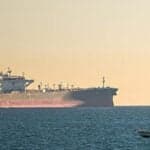


An oil tanker reportedly exploded in the Strait of Hormuz on Sunday after hitting a naval mine, according to Iran’s semi-official Tasnim news agency.
Tasnim said the tanker struck the mine after leaving a shipping route designated by Iranian authorities in the Strait of Hormuz.
The agency did not identify the vessel or provide details about its ownership, flag, cargo, destination or whether there were any casualties.
Iranian authorities had not officially commented on the reported explosion at the time of writing, and the circumstances surrounding the incident could not be independently verified.
The Strait of Hormuz connects the Persian Gulf with the Gulf of Oman and is the main export route for crude oil from Saudi Arabia, Kuwait, Iraq and the United Arab Emirates.
Any disruption in the narrow waterway is closely watched by global energy markets because of its potential impact on oil supplies and prices.
According to Tasnim, the vessel left the Tehran-approved shipping corridor before striking the sea mine. Iranian media described it as a vessel that had violated the designated route and said Tehran had repeatedly warned that ships leaving the approved corridor would bear the consequences.
The explosion follows several attacks on commercial vessels in the Gulf in recent weeks.
The incident comes after months of conflict involving Iran, the United States and Israel that have increased security risks in the Strait of Hormuz.
Iran has effectively restricted shipping through the waterway since the United States and Israel launched military operations against the country in February. Commercial vessels have since faced increased risks from naval operations, missile attacks and sea mines.
The reported explosion came a day after Iran’s Islamic Revolutionary Guard Corps (IRGC) said it had intercepted four commercial vessels using what it described as an “illegal and unsafe route” through the southern Strait of Hormuz.
Iranian state broadcaster IRIB reported that warning shots were fired to force the vessels to change course, although authorities did not identify the ships or disclose their nationalities.
Earlier this week, Iranian Foreign Minister Abbas Araghchi accused the United States of encouraging commercial vessels to avoid Iran-designated shipping routes in the Strait of Hormuz.
CBS News, citing regional sources, reported that Omani officials travelled to Tehran on Friday for talks on restoring normal shipping through the Strait of Hormuz.
The report said discussions were progressing positively, although both sides agreed more time was needed before any agreement could be reached.
The talks coincided with a temporary pause in U.S. military strikes against Iran after nearly two weeks of operations.
A senior Iranian source told Reuters that Tehran would stop its attacks as long as Washington maintained its current pause after 13 consecutive nights of bombing.
Iran also said it had temporarily suspended retaliatory attacks after U.S. military strikes paused over the previous two nights.
Army spokesman Mohammad Akraminia said Iran’s military response had always been based on retaliation and that Tehran had halted its operations after the recent pause in U.S. attacks.
The White House has also indicated that the pause is intended to allow diplomatic efforts to continue.
U.S. Ambassador to the United Nations Mike Waltz told Fox News that President Donald Trump was giving talks with Iran “a little bit of room,” but did not provide further details.
A senior Trump administration official separately told Reuters that Trump had always preferred a diplomatic solution but had also shown Iran the consequences if it failed to negotiate seriously.
CNN, citing a Pentagon official, reported that U.S. military operations against Iran are currently “on hold,” despite Trump’s warning that Washington could launch attacks on a “much higher level” if necessary.
References: indiatoday, timesnownews
Want to read more?
Check out the full article on the original site