Panama Canal To Cut Ship Transits Again Due To Severe Drought Linked To El Niño
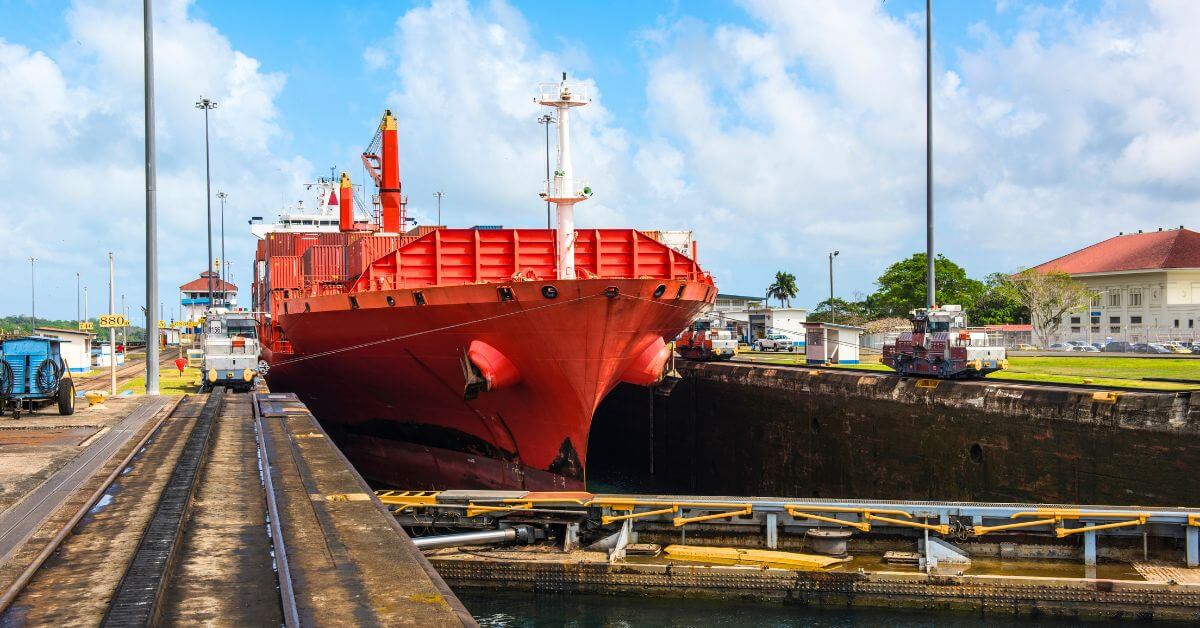
The Panama Canal will cut the number of ships allowed through the waterway again from October as a severe drought linked to El Niño leaves less water available to run its locks.
An average of 29.5 vessels a day will be allowed to transit the canal from October, according to a draft plan submitted to Panama’s parliament. That compares with 32 a day in September and 36 in August.
The 82-km canal handles about 5% of global maritime trade and around 40% of US container traffic. Shippers use it because it can save both time and money, especially on routes between China, Asia and the United States.
The canal depends on freshwater from rivers that flow into Lake Gatun. That water is used to operate the locks and move ships through the canal.
In September, officials said the canal’s watershed had received less rainfall than expected.
The locks work by filling with water to raise ships about 26 metres (85 feet) from sea level to Lake Gatun. The ships are then lowered back to sea level on the other side.
If lake levels become too low for the largest ships to pass safely, the Panama Canal Authority can impose restrictions to save water and keep the canal operating safely.
The canal faced much tougher limits in 2023. Water levels in the lakes that supply the canal fell so low that authorities cut daily transits from 38 to 22.
Those restrictions caused a backlog of ships and forced companies to look for other routes.
The current restrictions have also affected waiting times and the cost of getting a transit slot.
In August, ships were waiting up to 10 days to enter the canal, the longest wait since May. A container ship paid about $4 million to move ahead of the queue.
Shipping companies normally pay a flat fee to reserve a slot. They can also bid in a daily auction to skip the queue. Prices in these auctions generally rise when demand is high.
Shipping through the Strait of Hormuz, a major route for oil and gas, has also been disrupted.
The US-Israel war on Iran has caused a standstill in the strait, according to the supplied source material. The disruption has pushed up traffic through the Panama Canal and added to costs for shipping companies.
El Niño Brings Weather Problems
Panama has declared a nationwide emergency over El Niño.
El Niño is a natural weather pattern that develops over the Pacific and changes weather conditions around the world. It is also increasing global temperatures.
This year’s El Niño is expected to be the strongest since records began four decades ago and is forecast to peak later this year.
The effects are being seen across several regions.
Nine countries in Central America and northern parts of South America recorded their hottest June-August period on record this year.
Fifty-two countries across all continents also broke their seasonal temperature records for the same period, according to an Agence France-Presse analysis of meteorological data from the European Copernicus programme.
References: The Guardian, newindianexpress
Want to read more?
Check out the full article on the original site